
Bay Leaf Wine
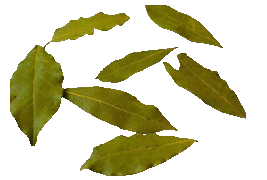
Bay laurel has been cultivated for thousands of years and was highly prized by the ancient Greeks and Romans. Although best known as a culinary herb, it has also been used traditionally in herbal drinks and country wines. During fermentation, the strong aromatic compounds become much softer and more refined, producing a wine with subtle floral, citrus and lightly spiced notes rather than the pronounced flavour associated with soups and stews. This transformation makes bay leaf wine one of the most surprising and rewarding recipes in the Herbs & Leaves Collection. Its balanced character and excellent compatibility with food have helped maintain its place as a traditional, if uncommon, country wine.
At a glance
About this wine
Bay laurel has been cultivated for thousands of years and was highly prized by the ancient Greeks and Romans. Although best known as a culinary herb, it has also been used traditionally in herbal drinks and country wines.
During fermentation, the strong aromatic compounds become much softer and more refined, producing a wine with subtle floral, citrus and lightly spiced notes rather than the pronounced flavour associated with soups and stews. This transformation makes bay leaf wine one of the most surprising and rewarding recipes in the Herbs & Leaves Collection.
Its balanced character and excellent compatibility with food have helped maintain its place as a traditional, if uncommon, country wine.
Ingredients
- Approximately 60–80 fresh bay leaves (about 50–70 g)
- 2.0–2.25 lb (900 g–1.0 kg) white sugar
- Water (to make up to 1 UK gallon (4.5 L))
- Juice of 2 lemons
- Juice of 1 orange
- Finely pared zest of 1 lemon
- Finely pared zest of 1 orange
- 1 tsp yeast nutrient
- 1 Campden tablet (optional)
Wine yeast (half packet recommended)
- Lalvin QA23 (highly recommended)
- Lalvin 71B
- EC-1118
Optional Ingredients
- 75–100 g raisins (for additional body)
- 1 tsp glycerine after fermentation
Equipment
- The following equipment is recommended to make this 1 Gallon.
- Sanitising fluid,
- 2 gallon Fermenting bucket,
- Demijohn,
- Hydrometer,
- Syphon tube,
- Air lock,
- Rubber bung,
- Measuring cups,
- Muslin bag,
- Thermometer,
- Extra long stirring spoon,
- Kitchen scales,
- Campden tablets
Preparation
- Harvest fresh bay leaves on a dry day.
- Shake gently to remove insects.
- Rinse briefly if necessary.
- Tear each leaf once or twice to help release the aromatic oils.
- Avoid crushing the leaves into small pieces, which can make straining more difficult.
Method
- Pour the hot bay leaf infusion into a sanitised fermentation bucket.
- Dissolve the sugar into the infusion.
- Add the citrus juice and zest.
- Top up with cool water to reach 1 UK gallon (4.5 L).
- Allow to cool below 25°C (77°F).
- Add: Yeast nutrient Crushed Campden tablet (if using)
- Cover and leave for 24 hours if Campden was added.
- Add the yeast and stir thoroughly.
- Siphon carefully into a sterilised demijohn.
- Fit an airlock.
- Top up if necessary.
Fermentation notes
Primary Fermentation
Ferment for 5–7 days.
Stir gently once daily.
Maintain 18–22°C.
The herbal aroma softens noticeably during fermentation.
Secondary Fermentation
Allow fermentation to continue for approximately 3–5 weeks.
Rack whenever sediment reaches around 1–2 cm.
Clearing & ageing notes
Once fermentation has finished
Leave to clear for 2 months
Rack again if necessary.
Bottle when brilliantly clear.
Bay leaf wine benefits from a few months of bottle aging.
Minimum aging: 6 months
Ideal aging: 9–15 months
Peak drinking: 1–3 years
Tips & notes
Tips for Better Bay Leaf Wine
- Always use true bay laurel.
- Tear the leaves rather than chopping them finely.
- Cover the infusion while steeping to retain the aromatic oils.
- QA23 yeast produces a particularly fresh and elegant wine.
- Less bay is usually better than too much.
- Allow the wine to mature for at least six months before tasting.
Common Mistakes to Avoid
- Using cherry laurel by mistake.
- Boiling the leaves vigorously.
- Making the infusion excessively strong.
- Harvesting from treated ornamental plants.
- Drinking the wine immediately after fermentation.
Serving suggestions
- Serve lightly chilled (10–12°C)
- Excellent with roast chicken, turkey and pork
- Pairs beautifully with Gruyère, Cheshire and mature Cheddar
- Complements Mediterranean cuisine, roasted vegetables and mushroom dishes
- Delicious with savoury tarts and herb breads
Storage & ageing
- Improves for up to 3 years
- Store in a cool, dark place
- Best drinking window: 9 months–3 years
- Develops increasing smoothness during its first year
FAQs
Does bay leaf wine taste like bay leaves used in cooking? No. Fermentation softens the herb dramatically, producing delicate floral, citrus and gently spiced notes rather than the strong flavour associated with cooking.
Can I use dried bay leaves? Yes. Dried bay leaves can be used successfully, but reduce the quantity to approximately 20–25 dried leaves, as drying concentrates their flavour.
Why is identification so important? True bay laurel ( Laurus nobilis) is suitable for culinary use and winemaking. Cherry laurel and Portuguese laurel are different plants and should never be substituted.
Can I freeze fresh bay leaves? Yes. Frozen leaves retain much of their aroma and are excellent for winemaking throughout the year.
How long should I age bay leaf wine? It is usually at its best between 9 months and 3 years, when the herbal flavours have mellowed into a smooth, balanced wine