
Damson Wine
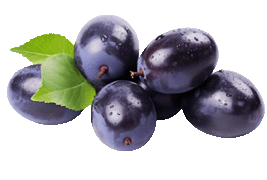
Damson wine is a traditional British country wine made from small, deep purple wild plums known for their high tannin and strong, slightly astringent flavour. It produces a rich, dark wine with excellent structure, often compared to a light red grape wine when properly aged. Young damson wine can taste sharp, tannic, and quite rustic, but with time it transforms into a smooth, complete wine with deep plum and almond-like notes and a long finish
At a glance
About this wine
Damson wine is a traditional British country wine made from small, deep purple wild plums known for their high tannin and strong, slightly astringent flavour. It produces a rich, dark wine with excellent structure, often compared to a light red grape wine when properly aged.
Young damson wine can taste sharp, tannic, and quite rustic, but with time it transforms into a smooth, complete wine with deep plum and almond-like notes and a long finish
Ingredients
- 2.5–3.2 kg ripe damsons
- 1.0 to 1.25 kg white sugar
- 1 tsp yeast nutrient
- 1/2 tsp pectic enzyme
- Water to 1 UK gallon (4.5 litres)
- 1 Campden tablet (Recommended for fresh fruit)
- Lalvin 71B (best for softening harsh edges)
- Lalvin D47 ( adds structure and body)
- EC-1118 (very dry, strong ferment)
Equipment
- The following equipment is recommended to make this 1 Gallon.
- Sanitising fluid,
- 2 gallon Fermenting bucket,
- Demijohn,
- Hydrometer,
- Syphon tube,
- Air lock,
- Rubber bung,
- Measuring cups,
- Muslin bag,
- Thermometer,
- Extra long stirring spoon,
- Kitchen scales,
- Campden tablets
Preparation
- Wash the damsons thoroughly and remove stems and leaves
- Remove and damaged or unripe fruit
- Stone the fruit if possible (recommended to avoid excessive bitterness)
- If stoning is not practical, ensure fruit is lightly crushed and not overprocessed
- Freeze fruit overnight if available to improve extraction.
- Lightly crush the and place into a sanitised fermentation bag in the primary fermenter
Method
- Dissolve sugar in approx 2.5 litres of boiling water
- Pour the hot sugar solution over the fruit
- Add cool water to reach 1 UK gallon (4.5 L total volume)
- Allow to cool below 25 C (77 F)
- Add Pectic enzyme, Yeast nutrient and crushed campden tablet if using
- Cover and leave for 24 hours if Campden tablet used.
- Add yeast
- Check the Original Gravity.
- Aim for an OG of approximately 1.090–1.095.
Fermentation notes
Primary Fermentation
Ferment on the fruit for approximately 7 days, stirring twice daily.
Maintain a temperature between 20°C and 22°C.
The fermentation should become vigorous within 24–48 hours.
After seven days
Strain through a sterilised muslin bag.
Press the fruit gently.
Transfer the wine into a sterilised demijohn.
Fit an airlock.
Secondary Fermentation
Continue fermenting until activity has ceased.
Rack whenever sediment reaches approximately 1–2 cm.
Fermentation may continue for 6–10 weeks, depending upon temperature and yeast performance.
The wine should finish close to 0.995–1.000 before stabilising.
Clearing & ageing notes
Once fermentation has finished Allow to clear 2-3 month
Rack if needed
Bottle when bright and stable
Tips & notes
Tips for Better Port-Style Wine
- Freeze the fruit before use for better extraction.
- EC-1118 yeast handles the higher alcohol level well.
- Don't rush maturation—this style improves dramatically with age.
- Back-sweeten only after fermentation has completely finished and the wine has been stabilised.
- Store bottles on their side if using natural corks.
Common Mistakes to Avoid
- Using underripe fruit.
- Bottling before the wine has cleared.
- Attempting to sweeten without stabilising first.
- Drinking before sufficient maturation.
Serving suggestions
- Serve slightly cool (14–16°C).
Excellent with
- Stilton and other blue cheeses
- Mature Cheddar
- Dark chocolate desserts
- Christmas cake
- Mince pies
- Fruit cake
- Roasted nuts
- Also delicious on its own as an after-dinner wine.
Storage & ageing
- Minimum ageing: 18 months
- Best after: 2–5 years
- Can continue improving for 8 years or more
- Store upright if using screw caps, or on the side if using natural corks.
FAQs
Do I have to stone damsons : Yes, strongly recommended for best flavour and smoothness
Why does my wine taste so harsh: This is normal - Damson wine requires aging to soften.
Can I use frozen damsons: Yes and it quite often improved the result
Can I make it sweet: Yes, but only after stabilising and aging
Can I blend damsons with other fruit: Yes blackberry or apple works particularly well