
Onion wine
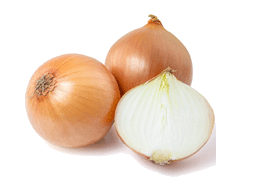
Onion wine has long been part of Britain's country winemaking tradition, particularly during periods when home-grown vegetables were plentiful and waste was avoided. Despite its humble origins, the finished wine is surprisingly sophisticated. During fermentatio, the pungent onion aromas diminish dramatically, leaving a wine with gentle savoury complexity, nutty notes and a character that many compare to a light fino or amontillado-style sherry. It is a wine that rewards patience and an open mind, offering an experience unlike almost any other homemade wine.
At a glance
About this wine
Onion wine has long been part of Britain's country winemaking tradition, particularly during periods when home-grown vegetables were plentiful and waste was avoided. Despite its humble origins, the finished wine is surprisingly sophisticated.
During fermentatio, the pungent onion aromas diminish dramatically, leaving a wine with gentle savoury complexity, nutty notes and a character that many compare to a light fino or amontillado-style sherry. It is a wine that rewards patience and an open mind, offering an experience unlike almost any other homemade wine.
Ingredients
- 2 kg onions
- 2.0–2.25 lb (900 g–1.0 kg) white sugar
- Water (to make up to 1 UK gallon (4.5 litres))
- Juice of 2 lemons
- Juice of 1 orange
- 100 g raisins
- 1 tsp yeast nutrient
- 1 tsp pectic enzyme
- 1 Campden tablet (optional)
Wine yeast (half packet recommended)
- Lalvin D47 ★ Highly recommended
- EC-1118
- QA23
Optional Ingredients
- ¼ tsp wine tannin
- 1 tsp glycerine after fermentation
Equipment
- The following equipment is recommended to make this 1 Gallon.
- Sanitising fluid,
- 2 gallon Fermenting bucket,
- Demijohn,
- Hydrometer,
- Syphon tube,
- Air lock,
- Rubber bung,
- Measuring cups,
- Muslin bag,
- Thermometer,
- Extra long stirring spoon,
- Kitchen scales,
- Campden tablets
Preparation
- Peel the onions.
- Slice thinly.
- Place into a large saucepan with approximately 3 litres of water.
- Simmer gently for 20–30 minutes.
- Do not boil vigorously, as this may produce harsher flavours.
- Strain through muslin.
- Discard the onion solids.
Method
- Dissolve the sugar into the hot onion liquor.
Add
- Lemon juice
- Orange juice
- Raisins
- Top up with cool water to reach 1 UK gallon (4.5 litres).
- Cool below 25°C (77°F).
Add
- Yeast nutrient
- Pectic enzyme
- Crushed Campden tablet (if using)
- Leave for 24 hours if using Campden.
- Add the yeast and stir thoroughly.
Fermentation notes
Primary Fermentation
Ferment for 5–7 days.
Stir gently once daily.
Maintain 18–22°C.
The characteristic onion aroma will fade rapidly during fermentation.
Secondary Fermentation
Continue fermentation for approximately 4–6 weeks.
Rack whenever sediment reaches approximately 1–2 cm.
Transfer to Secondary
Siphon into a sterilised demijohn.
Fit an airlock.
Top up if required.
Clearing & ageing notes
Clearing & Aging
Once fermentation has finished
Leave to clear for 2–3 months
Rack again if necessary.
Bottle when brilliantly clear.
Onion wine improves significantly with age.
Minimum aging: 12 months
Ideal aging: 18–24 months
Peak drinking: 2–4 years
Storage & Aging
Best consumed within 4 years
Store in a cool, dark place
Best drinking window: 2–4 years
Continues to mellow and gain complexity with bottle age.
Tips & notes
Common Mistakes to Avoid
- Using old or sprouting onions.
- Boiling vigorously.
- Bottling before the wine is completely clear.
- Judging the wine too early—the onion aroma disappears with maturation.
Tips for Better Onion Wine
- Use fresh, firm onions.
- Simmer gently rather than boiling hard.
- D47 produces a fuller-bodied wine with excellent ageing potential.
- Raisins improve body and balance.
- Mature for at least one year before opening.
Serving suggestions
- Serve lightly chilled (10–12°C)
- Excellent with mature Cheddar, Parmesan and Stilton
- Pairs beautifully with mushroom dishes, roast chicken and savoury pastries
- A good accompaniment to charcuterie and pâté
Storage & ageing
- Best consumed within 4 years
- Store in a cool, dark place
Best drinking window
- 2–4 years
- Continues to mellow and gain complexity with bottle age.
FAQs
Does Onion Wine taste like onions? No. The strong onion flavour largely disappears during fermentation and ageing, leaving a dry, savoury wine with nutty and lightly oxidative notes.
Which onions are best? White onions generally produce the cleanest and most delicate wine, although brown onions also make an excellent, fuller-bodied version.
Can I use red onions? Red onions are not recommended, as they can contribute unwanted colour and a stronger flavour profile.
Why does this wine need longer ageing? Extended bottle ageing allows the remaining onion character to soften and the savoury complexity to develop fully.
Can I blend onions with other vegetables? Some traditional recipes combine onions with parsnips or celery, but this recipe showcases the distinctive character of onions on their own.