
Magnolia Wine
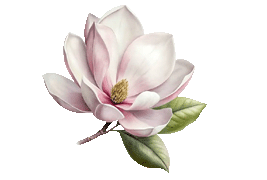
Magnolia trees are among the first ornamental trees to flower each spring, producing spectacular blooms long before many other garden plants awake. Their blossoms are not only beautiful but also surprisingly aromatic, with subtle notes of citrus, ginger and vanilla that lend themselves exceptionally well to winemaking. Although magnolia wine is a relatively modern addition to country winemaking, it has quickly gained a reputation for elegance and originality. The finished wine is light, fragrant and refined, making it an excellent choice for those looking to explore beyond the traditional flower wines.
At a glance
About this wine
Magnolia trees are among the first ornamental trees to flower each spring, producing spectacular blooms long before many other garden plants awake. Their blossoms are not only beautiful but also surprisingly aromatic, with subtle notes of citrus, ginger and vanilla that lend themselves exceptionally well to winemaking.
Although magnolia wine is a relatively modern addition to country winemaking, it has quickly gained a reputation for elegance and originality. The finished wine is light, fragrant and refined, making it an excellent choice for those looking to explore beyond the traditional flower wines.
Ingredients
- Approximately 250–300 g magnolia petals (around 2 litres loosely packed)
- 2.0–2.25 lb (900 g–1.0 kg) white sugar
- Water (to make up to 1 UK gallon (4.5 L))
- Juice of 2 lemons
- Juice of 1 orange
- Finely pared zest of 2 lemons
- Finely pared zest of 1 orange
- 100 g raisins
- 1 tsp yeast nutrient
- 1 Campden tablet (optional)
Wine yeast (half packet recommended)
- Lalvin QA23 (highly recommended)
- Lalvin 71B
- EC-1118
Optional Ingredients
- 1 tbsp light honey
- 1 tsp glycerine after fermentation
Equipment
- The following equipment is recommended to make this 1 Gallon.
- Sanitising fluid,
- 2 gallon Fermenting bucket,
- Demijohn,
- Hydrometer,
- Syphon tube,
- Air lock,
- Rubber bung,
- Measuring cups,
- Muslin bag,
- Thermometer,
- Extra long stirring spoon,
- Kitchen scales.
Preparation
- Harvest flowers during a dry morning.
- Carefully remove the petals.
- Discard green bases and central flower parts.
- Shake gently to remove insects.
- Use immediately.
Method
- Dissolve the sugar into the warm infusion.
- Add: Lemon juice Orange juice Raisins
- Top up with cool water to reach 1 UK gallon (4.5 L).
- Cool below 25°C (77°F).
- Add: Yeast nutrient Crushed Campden tablet (if using)
- Leave for 24 hours if Campden was added.
- Add the yeast and stir thoroughly.
- Siphon into a sterilised demijohn.
- Fit an airlock.
- Top up if required.
Fermentation notes
Primary Fermentation
Ferment for 5–7 days.
Stir gently once daily.
Maintain 18–22°C.
The wine develops delicate citrus and floral aromas during fermentation.
Secondary Fermentation
Continue fermentation for approximately 3–5 weeks.
Rack whenever sediment reaches 1–2 cm.
Clearing & ageing notes
Once fermentation has finished
Leave to clear for 2 months
Rack again if required.
Bottle when brilliantly clear.
Magnolia wine matures beautifully.
Minimum aging: 9 months
Ideal aging: 12–18 months
Peak drinking: 1–3 years
Tips & notes
Tips for Better Magnolia Wine
- Use only freshly opened flowers.
- Remove all green tissue before infusion.
- QA23 preserves the delicate blossom character exceptionally well.
- Keep the infusion relatively short to avoid extracting bitterness.
- Allow at least one year of bottle aging.
Common Mistakes to Avoid
- Including green flower bases.
- Using faded blossoms.
- Over-steeping the petals.
- Harvesting after heavy rain.
- Drinking before adequate maturation.
Serving suggestions
- Serve well chilled (8–10°C)
- Excellent as an aperitif
- Pairs beautifully with seafood, grilled chicken and soft cheeses
- Complements spring salads
- Wonderful with lemon cheesecake, vanilla desserts or almond pastries
Storage & ageing
- Best consumed within 3 years
- Store in a cool, dark place
- Best drinking window: 1–3 years
- Retains its fresh floral bouquet best during its early bottle age.
FAQs
Are all magnolia flowers suitable? Most fragrant ornamental magnolias are considered suitable for culinary use, but flavours vary considerably. Saucer Magnolia ( Magnolia × soulangeana) is one of the most reliable choices for winemaking. Avoid using flowers from trees that have been treated with pesticides or if you cannot confidently identify the species.
Should I use the whole flower? No. Use only the petals. Remove the green bases and central flower parts to minimise bitterness.
Can I freeze the petals? Yes. Fresh petals freeze well and retain much of their flavour.
Can I dry magnolia petals? Drying is not recommended, as much of the delicate fragrance is lost.
How long should I age magnolia wine? It is usually at its best after 12–18 months, when the floral, citrus and gentle spice notes have harmonised