
Cranberry Wine
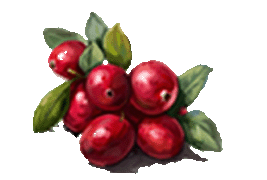
Cranberries are traditionally associated with colder climates and have long been valued for their sharp, refreshing acidity and distinctive flavour. While more commonly used in sauces and juices in the UK, they make an excellent base for a crisp fruit wine. Because of their naturally high acid content, cranberry wines require careful balancing but reward patience with a clear refreshing drink that pairs well with food.
At a glance
About this wine
Cranberries are traditionally associated with colder climates and have long been valued for their sharp, refreshing acidity and distinctive flavour. While more commonly used in sauces and juices in the UK, they make an excellent base for a crisp fruit wine.
Because of their naturally high acid content, cranberry wines require careful balancing but reward patience with a clear refreshing drink that pairs well with food.
Ingredients
- 3.5–4.5 lb (1.6–2.0 kg) cranberries (fresh or frozen)
- 2.0–2.25 lb (900 g–1.0 kg) white sugar
- Water (to make up to 1 UK gallon / 4.5 L total volume)
- 1 tsp yeast nutrient
- ½ tsp pectic enzyme
- 1 Campden tablet (recommended for fresh fruit)
Wine yeast (half packet recommended)
- Lalvin 71B (best for balancing acidity)
- Lalvin D47 (adds body and roundness)
- EC-1118 (very dry, clean fermentation)
Optional Ingredients
- ½ tsp wine tannin (optional — cranberries already contain moderate tannin)
- Juice of ½ lemon (only if extra acidity lift is desired — usually not needed)
- 1 cinnamon stick (very traditional cranberry pairing)
- Small piece of orange peel (enhances aroma and complexity)
- 1 tsp glycerine after fermentation (improves mouthfeel)
Equipment
- The following equipment is recommended to make this 1 Gallon.
- Sanitising fluid,
- 2 gallon Fermenting bucket,
- Demijohn,
- Hydrometer,
- Syphon tube,
- Air lock,
- Rubber bung,
- Measuring cups,
- Muslin bag,
- Thermometer,
- Extra long stirring spoon,
- Kitchen scales,
- Campden tablets
Preparation
- Rinse cranberries and remove any soft or damaged fruit.
- Freeze berries for at least 24 hours if using fresh fruit.
- Lightly crush berries after thawing to break skins and release juice.
- Place crushed fruit into a sanitised fermentation bag in the primary fermenter.
- Expect a thick, gel-like pulp due to high pectin content.
Method
- Dissolve sugar in approximately 2.5 litres of boiling water.
- Pour hot sugar solution over the fruit.
- Add cool water to reach 1 UK gallon (4.5 L total volume).
- Allow to cool below 25°C (77°F).
- Add: Pectic enzyme (important for clarity) Yeast nutrient Crushed Campden tablet (if used)
- Cover and leave for 24 hours if Campden was added.
- Lift fruit bag and allow to drain naturally — do not squeeze.
- Siphon liquid into a sterilised demijohn.
- Fit airlock.
- Top up with cooled boiled water if required.
Fermentation notes
Primary Fermentation
Add yeast and stir thoroughly.
Stir daily to break up thick fruit cap.
Keep fruit submerged as much as possible.
Ferment for 5–7 days at 18–22°C.
Cranberry ferments are often quite foamy and may appear slow at first due to pectin content, but they typically proceed steadily once active.
Secondary Fermentation
Allow fermentation to complete over 3–5 weeks.
Rack when sediment reaches 1–2 cm.
Clearing & ageing notes
Once fermentation has finished
Allow to clear for 2–3 months
Rack if necessary
Bottle once bright and stable
Cranberry wine benefits from aging, which softens acidity and integrates flavour
Minimum aging: 4–6 months
Ideal aging: 9–12 months
Peak drinking: 1–2 years
Tips & notes
Tips for Better Cranberry Wine
- Freezing cranberries is essential for good juice extraction.
- The wine will taste very sharp when young — this is normal.
- 71B yeast is highly recommended to soften acidity.
- Pectic enzyme is important for clarity due to high pectin content.
- Slight backsweetening after stabilisation often improves balance significantly.
- Adding a small amount of orange peel can dramatically improve aroma.
Serving suggestions
- Serve well chilled (8–10°C)
- Pairs well with roast poultry and turkey
- Excellent with soft cheeses and festive meals
- Works well slightly sweetened for balance
Storage & ageing
- Improves for up to 2 years
- Store in a cool, dark place
- Best drinking window: 6–24 months
- Benefits significantly from bottle aging
FAQs
Why is my cranberry wine so sour? Cranberries are naturally very high in acid — aging and slight backsweetening help balance this.
Can I use dried cranberries? Not recommended — they contain preservatives that can inhibit fermentation.
Do I need pectic enzyme? Yes — cranberries are very high in pectin and will haze without it.
Can I mix cranberries with other fruit? Yes — apple and orange are especially good combinations.
Why is fermentation slow? High acidity and pectin can delay early activity, but it will usually progress normally