
Elderflower Wine
Few wines are more closely associated with British country winemaking than elderflower wine. Every summer, hedgerows throughout the United Kingdom become covered with fragrant creamy-white blossom, providing generations of home winemakers with one of nature's finest ingredients. The secret to outstanding elderflower wine lies in harvesting the flowers at the perfect stage of development. Fresh pollen contributes the characteristic floral perfume, while citrus fruits provide the acidity needed to balance the naturally delicate flavour of the blossoms. The finished wine is often compared to aromatic white grape varieties because of its muscat-like bouquet and refreshing finish. Elegant, fragrant and surprisingly sophisticated, elderflower wine has earned its reputation as one of the finest traditional country wines ever produced.
At a glance
About this wine
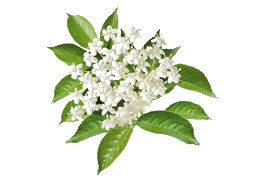
Few wines are more closely associated with British country winemaking than elderflower wine. Every summer, hedgerows throughout the United Kingdom become covered with fragrant creamy-white blossom, providing generations of home winemakers with one of nature's finest ingredients.
The secret to outstanding elderflower wine lies in harvesting the flowers at the perfect stage of development. Fresh pollen contributes the characteristic floral perfume, while citrus fruits provide the acidity needed to balance the naturally delicate flavour of the blossoms.
The finished wine is often compared to aromatic white grape varieties because of its muscat-like bouquet and refreshing finish. Elegant, fragrant and surprisingly sophisticated, elderflower wine has earned its reputation as one of the finest traditional country wines ever produced.
Ingredients
- 20–25 large elderflower heads
- 2.0–2.25 lb (900 g–1.0 kg) white sugar
- Water (to make up to 1 UK gallon (4.5 L))
- Juice of 2 lemons
- Juice of 1 orange
- Finely pared zest of 2 lemons
- Finely pared zest of 1 orange
- 100 g raisins (recommended for additional body)
- 1 tsp yeast nutrient
- 1 Campden tablet (optional)
Wine yeast (half packet recommended)
- Lalvin 71B (highly recommended)
- Lalvin QA23
- EC-1118
Optional Ingredients
- ¼ tsp wine tannin
- 1 tbsp light honey (replace an equal quantity of sugar)
- 1 tsp glycerine after fermentation
Equipment
- The following equipment is recommended to make this 1 Gallon.
- Sanitising fluid,
- 2 gallon Fermenting bucket,
- Demijohn,
- Hydrometer,
- Syphon tube,
- Air lock,
- Rubber bung,
- Measuring cups,
- Muslin bag,
- Thermometer,
- Extra long stirring spoon,
- Kitchen scales.
Preparation
- Harvest the flowers on a warm, dry day.
- Shake each flower head gently to remove insects.
- Remove as much green stalk as possible using scissors or a fork.
- Do not wash the flowers unless absolutely necessary.
- The yellow pollen carries much of the elderflower's characteristic aroma.
Method
- Dissolve the sugar into the warm infusion.
- Add: Lemon juice Orange juice Raisins
- Top up with cool water to reach 1 UK gallon (4.5 L).
- Allow the must to cool below 25°C (77°F).
- Add: Yeast nutrient Crushed Campden tablet (if using)
- Cover and leave for 24 hours if Campden was added.
- Add the yeast and stir thoroughly.
- Siphon carefully into a sterilised demijohn.
- Fit an airlock.
- Top up if required.
Fermentation notes
Primary Fermentation
Ferment for 5–7 days.
Stir gently once each day.
Maintain a fermentation temperature of 18–22°C.
The room will quickly fill with the unmistakable fragrance of elderflower.
Secondary Fermentation
Allow fermentation to continue for approximately 3–5 weeks.
Rack whenever sediment reaches around 1–2 cm.
Clearing & ageing notes
Once fermentation has finished
Leave to clear for 2 months
Rack again if necessary.
Bottle when brilliantly clear.
Elderflower wine is excellent while still relatively young.
Minimum aging: 6 months
Ideal aging: 9–15 months
Peak drinking: 1–3 years
Tips & notes
Tips for Better Elderflower Wine
- Pick flowers only on warm, dry days.
- Remove as much green stalk as possible.
- Never wash the flowers unless essential.
- Add raisins for improved body.
- Lalvin 71B beautifully enhances the floral aromas.
- Allow at least nine months before opening the first bottle.
Common Mistakes to Avoid
- Harvesting after rain.
- Using flowers that have begun to brown.
- Leaving excessive green stem attached.
- Collecting flowers from roadside trees.
- Rushing the maturation process.
Serving suggestions
- Serve well chilled (8–10°C)
- Excellent as an aperitif
- Pairs beautifully with grilled fish and seafood
- Complements goat's cheese, Brie and Camembert
- Excellent with summer salads and asparagus
- Wonderful with lemon desserts, shortbread and fresh berries
Storage & ageing
- Best consumed within 3 years
- Store in a cool, dark place
- Best drinking window: 9 months–3 years
- Designed to retain its delicate floral bouquet
FAQs
Can I use dried elderflowers? Yes, although fresh flowers produce a noticeably more aromatic wine. If using dried flowers, ensure they are of good quality and reduce the quantity appropriately.
Should I wash the flowers? No. Simply shake them gently to remove insects. Washing removes the pollen that contributes much of the wine's aroma.
Can I freeze elderflowers? Yes. Flower heads freeze very well and can be collected over several days before brewing.
Why are raisins included? Elderflowers provide outstanding aroma but very little body. Raisins improve texture and mouthfeel without masking the delicate floral character.
How long should I age elderflower wine? Although enjoyable after six months, it is usually at its best after 9–15 months, when the floral and citrus notes have fully integrated.