
Lavender Wine
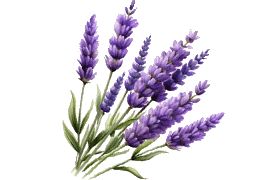
Lavender has been cultivated in Britain for centuries, prized for its fragrance, medicinal uses and culinary qualities. Home winemakers soon discovered that, when used sparingly, its aromatic flowers could produce an elegant and remarkably sophisticated wine. Unlike its powerful scent in the garden, lavender becomes much softer after fermentation, revealing notes of honey, citrus and wildflowers alongside its unmistakable floral bouquet. The result is a wine that is both refreshing and refined, particularly when served well chilled on a summer evening. The key to success is restraint. A light infusion allows the delicate flavours to shine without overpowering the palate, making lavender wine one of the finest aromatic flower wines in the collection.
At a glance
About this wine
Lavender has been cultivated in Britain for centuries, prized for its fragrance, medicinal uses and culinary qualities. Home winemakers soon discovered that, when used sparingly, its aromatic flowers could produce an elegant and remarkably sophisticated wine.
Unlike its powerful scent in the garden, lavender becomes much softer after fermentation, revealing notes of honey, citrus and wildflowers alongside its unmistakable floral bouquet. The result is a wine that is both refreshing and refined, particularly when served well chilled on a summer evening.
The key to success is restraint. A light infusion allows the delicate flavours to shine without overpowering the palate, making lavender wine one of the finest aromatic flower wines in the collection.
Ingredients
- 75–100 g fresh lavender flower buds or 25–30 g dried culinary lavender
- 2.0–2.25 lb (900 g–1.0 kg) white sugar
- Water (to make up to 1 UK gallon (4.5 L))
- Juice of 2 lemons
- Juice of 1 orange
- Finely pared zest of 2 lemons
- Finely pared zest of 1 orange
- 100 g raisins
- 1 tsp yeast nutrient
- 1 Campden tablet (optional)
Wine yeast (half packet recommended)
- Lalvin QA23 (highly recommended)
- Lalvin 71B
- EC-1118
Optional Ingredients
- 1 tbsp light honey
- 1 tsp glycerine after fermentation
Equipment
- The following equipment is recommended to make this 1 Gallon.
- Sanitising fluid,
- 2 gallon Fermenting bucket,
- Demijohn,
- Hydrometer,
- Syphon tube,
- Air lock,
- Rubber bung,
- Measuring cups,
- Muslin bag,
- Thermometer,
- Extra long stirring spoon,
- Kitchen scales.
Preparation
- Harvest the flower spikes during a warm, dry morning.
- Strip the flower buds from the stems.
- Shake gently to remove insects.
- Use immediately for the finest aroma.
Method
- Dissolve the sugar into the warm infusion.
- Add: Lemon juice Orange juice Raisins
- Top up with cool water to reach 1 UK gallon (4.5 L).
- Cool below 25°C (77°F).
- Add: Yeast nutrient Crushed Campden tablet (if using)
- Leave for 24 hours if Campden was added.
- Add the yeast and stir thoroughly.
- Siphon into a sterilised demijohn.
- Fit an airlock.
- Top up if necessary.
Fermentation notes
Primary Fermentation
Ferment for 5–7 days.
Stir once daily.
Maintain 18–22°C.
The floral aroma becomes beautifully rounded during fermentation.
Secondary Fermentation
Continue fermentation for 3–5 weeks.
Rack whenever sediment reaches approximately 1–2 cm.
Clearing & ageing notes
Once fermentation has finished
Leave to clear for 2 months
Rack again if necessary.
Bottle when brilliantly clear.
Lavender wine benefits from moderate bottle aging.
Minimum aging: 9 months
Ideal aging: 12–18 months
Peak drinking: 1–3 years
Tips & notes
Tips for Better Lavender Wine
- Less is more—avoid using excessive lavender.
- English Lavender produces the smoothest wine.
- QA23 yeast preserves delicate floral aromas exceptionally well.
- Raisins improve body without masking the blossom character.
- Mature for at least one year before serving.
Common Mistakes to Avoid
- Using too much lavender.
- Including stems or leaves.
- Steeping for too long.
- Using ornamental flowers treated with chemicals.
- Drinking too young.
Serving suggestions
- Serve well chilled (8–10°C)
- Excellent as an aperitif
- Pairs beautifully with goat's cheese, Brie and soft blue cheeses
- Complements grilled chicken, seafood and summer salads
- Wonderful with lemon tart, lavender shortbread or vanilla desserts
Storage & ageing
- Best consumed within 3 years
- Store in a cool, dark place
- Best drinking window: 1–3 years
- Retains its delicate floral bouquet throughout its early years.
FAQs
Can I use dried lavender? Yes. Culinary dried lavender works very well, but use only about one-third of the fresh quantity because drying concentrates the flavour.
Which lavender is best? English Lavender ( Lavandula angustifolia) is generally preferred because it produces the smoothest and most balanced wine.
Why is the steeping time shorter than for some other flower wines? Lavender's essential oils extract very quickly. A short infusion preserves the delicate floral notes while avoiding an overly perfumed character.
Can I freeze the flowers? Yes. Fresh flower buds freeze well and retain much of their aroma.
How long should I age lavender wine? It reaches its finest balance after 12–18 months, when the floral aromas have mellowed into a smooth, elegant bouquet