
Rowanberry Wine
The rowan tree has long been associated with British and Scottish folklore, where it was regarded as a tree of protection and good fortune. Although the berries are too bitter for most people to enjoy raw, they have traditionally been used to make jellies, preserves, and country wines. Rowanberry wine has been made for generations, particularly in northern Britain where wild trees are abundant. Properly aged, it develops an elegant balance of citrus, honey, dried fruit, and gentle bitterness that makes it unlike any other hedgerow wine.
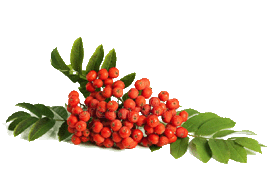
At a glance
About this wine
The rowan tree has long been associated with British and Scottish folklore, where it was regarded as a tree of protection and good fortune. Although the berries are too bitter for most people to enjoy raw, they have traditionally been used to make jellies, preserves, and country wines.
Rowanberry wine has been made for generations, particularly in northern Britain where wild trees are abundant. Properly aged, it develops an elegant balance of citrus, honey, dried fruit, and gentle bitterness that makes it unlike any other hedgerow wine.
Ingredients
- 5.0–6.0 lb (2.3–2.7 kg) rowanberries
- 2.25–2.5 lb (1.0–1.1 kg) white sugar
- Water (to make up to 1 UK gallon / 4.5 L total volume)
- 1 tsp yeast nutrient
- 1 tsp pectic enzyme
- 1 Campden tablet (recommended for fresh fruit)
Wine yeast (half packet recommended)
- Lalvin 71B (best for softening acidity)
- Lalvin D47 (adds body and complexity)
- EC-1118 (strong, reliable fermentation)
Optional Ingredients
- ½ tsp wine tannin (not usually required)
- Small piece of orange peel (enhances citrus aromas)
- 1 cinnamon stick (adds subtle warmth)
- 1 tsp glycerine after fermentation (improves mouthfeel)
- 1–2 lb (450–900 g) dessert apples (optional, to soften bitterness while retaining rowan character)
Equipment
- The following equipment is recommended to make this 1 Gallon.
- Sanitising fluid,
- 2 gallon Fermenting bucket,
- Demijohn,
- Hydrometer,
- Syphon tube,
- Air lock,
- Rubber bung,
- Measuring cups,
- Muslin bag,
- Thermometer,
- Extra long stirring spoon,
- Kitchen scales,
- Campden tablets
Preparation
- Harvest only fully coloured, ripe berries.
- Remove berries from all stalks and discard leaves or damaged fruit.
- Freeze berries for at least 48 hours, or harvest after several hard frosts.
- Thaw completely before use.
- Lightly crush the berries.
- Place them into a sanitised fermentation bag.
- Important: Freezing (or cooking) is recommended because it helps break down the naturally occurring parasorbic acid, reduces bitterness, and greatly improves flavour extraction.
Method
- Dissolve the sugar in approximately 2.5 litres of boiling water.
- Pour the hot sugar solution over the crushed berries.
- Add cool water to reach 1 UK gallon (4.5 L total volume).
- Allow the must to cool below 25°C (77°F).
- Add: Pectic enzyme Yeast nutrient Crushed Campden tablet (if using)
- Cover and leave for 24 hours if Campden was added.
- Lift the fermentation bag and allow it to drain naturally.
- Do not squeeze the fruit aggressively.
- Siphon the wine into a sterilised demijohn.
- Fit an airlock.
- Top up with cooled boiled water if required.
Fermentation notes
Primary Fermentation
Add the yeast and stir thoroughly.
Stir once or twice daily.
Keep the fruit cap submerged.
Ferment for 5–7 days at 18–22°C.
Expect the must to smell slightly herbal or citrus-like during the early stages of fermentation.
Secondary Fermentation
Allow fermentation to complete over 4–6 weeks.
Rack whenever sediment reaches approximately 1–2 cm.
Clearing & ageing notes
Once fermentation has finished
Allow to clear for 2–3 months.
Rack again if required.
Bottle once brilliantly clear.
Rowanberry wine requires patience more than almost any other country wine
Minimum aging: 9 months
Ideal aging: 18–24 months
Peak drinking: 2–5 years
Tips & notes
Tips for Better Rowanberry Wine
- Always freeze or frost the berries before use.
- Avoid green or underripe berries.
- Pectic enzyme is highly recommended for good clarity.
- 71B yeast helps soften the naturally firm acidity.
- Don't judge the wine in its first year—it changes dramatically with age.
- If you find pure rowan wine too austere, blending with dessert apples produces an excellent traditional country wine.
Serving suggestions
- Serve lightly chilled (10–12°C)
- Excellent with game, roast pork, and mature cheeses
- Pairs well with smoked foods
- Also works beautifully as a winter aperitif
Storage & ageing
- Improves for up to 5 years
- Store bottles upright until corks are fully expanded, then on their side if using natural corks
- Keep in a cool, dark place with a stable temperature
- Best drinking window: 2–5 years
FAQs
Do I really need to freeze the berries? Yes. Freezing (or harvesting after frost) improves flavour, softens bitterness, and helps break down naturally occurring parasorbic acid.
Can I eat rowanberries raw? Raw berries are very bitter and can upset the stomach. They should be frozen or cooked before use.
Why is my wine so bitter? Young rowanberry wine is naturally bitter and tannic. Extended aging greatly mellows these characteristics.
Can I blend rowanberries with other fruit? Yes. Apples are the classic companion producing a softer and more approachable wine while retaining the distinctive rowan flavour.
Does rowanberry wine improve with age? Absolutely. It is one of the best long-aging country wines and is often at its best after two or more years in the bottle.