
Blackberry Leaf Wine
Although blackberry fruits have long been used for winemaking, the leaves were equally valued by traditional country winemakers. Rich in gentle tannins and delicate aromatic compounds, young blackberry leaves produce an infusion that ferments into a remarkably refined wine with subtle herbal, floral and tea-like characteristics. Historically, blackberry leaves were also used to make herbal teas, and some of these delicate flavours carry through into the finished wine. Properly made, blackberry leaf wine offers a refreshing alternative to fruit wines and showcases the remarkable versatility of the British hedgerow.
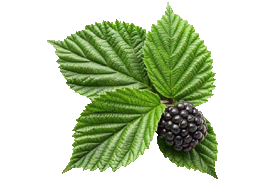
At a glance
About this wine
Although blackberry fruits have long been used for winemaking, the leaves were equally valued by traditional country winemakers. Rich in gentle tannins and delicate aromatic compounds, young blackberry leaves produce an infusion that ferments into a remarkably refined wine with subtle herbal, floral and tea-like characteristics.
Historically, blackberry leaves were also used to make herbal teas, and some of these delicate flavours carry through into the finished wine. Properly made, blackberry leaf wine offers a refreshing alternative to fruit wines and showcases the remarkable versatility of the British hedgerow.
Ingredients
- Approximately 175–225 gm young blackberry leaves (loosely packed, around 3–4 litres)
- 2.0–2.25 lb (900 g–1.0 kg) white sugar
- Water (to make up to 1 UK gallon (4.5 L))
- Juice of 2 lemons
- Juice of 1 orange
- Finely pared zest of 1 lemon
- Finely pared zest of 1 orange
- 1 tsp yeast nutrient
- 1 Campden tablet (optional)
Wine yeast (half packet recommended)
- Lalvin QA23 (highly recommended)
- Lalvin 71B
- EC-1118
Optional Ingredients
- 75–100 g raisins (for a little extra body)
- Small piece of fresh ginger
- 1 tsp glycerine after fermentation
Equipment
- The following equipment is recommended to make this 1 Gallon.
- Sanitising fluid,
- 2 gallon Fermenting bucket,
- Demijohn,
- Hydrometer,
- Syphon tube,
- Air lock,
- Rubber bung,
- Measuring cups,
- Muslin bag,
- Thermometer,
- Extra long stirring spoon,
- Kitchen scales,
- Campden tablets
Preparation
- Pick the young leaves on a dry morning after the dew has evaporated.
- Shake gently to remove insects.
- Rinse quickly in cool water if necessary.
- Remove any coarse stalks or damaged leaves.
- Young leaves produce the cleanest flavour and the most delicate aroma.
Method
- Pour the hot blackberry leaf infusion into a sanitised fermentation bucket.
- Dissolve the sugar into the hot infusion.
- Add the citrus juice and zest.
- Top up with cool water to reach 1 UK gallon (4.5 L).
- Allow the must to cool below 25°C (77°F).
- Add: Yeast nutrient Crushed Campden tablet (if using)
- Cover and leave for 24 hours if Campden was added.
- Add the yeast and stir thoroughly.
- Siphon carefully into a sterilised demijohn.
- Fit an airlock.
- Top up if required.
Fermentation notes
Primary Fermentation
Ferment for 5–7 days.
Stir gently once daily.
Maintain a fermentation temperature of 18–22°C.
With no solid material remaining, fermentation is clean and straightforward.
Secondary Fermentation
Allow fermentation to continue for approximately 3–5 weeks.
Rack whenever sediment reaches around 1–2 cm.
Clearing & ageing notes
Once fermentation has finished
Leave to clear for 2 months
Rack again if necessary.
Bottle when brilliantly clear.
Blackberry leaf wine is best enjoyed while youthful.
Minimum aging: 4 months
Ideal aging: 6–12 months
Peak drinking: 1–2 years
Tips & notes
Tips for Better Blackberry Leaf Wine
- Harvest only young spring leaves.
- Avoid over-boiling the leaves.
- QA23 yeast preserves delicate aromas exceptionally well.
- Citrus is essential to brighten the flavour.
- Raisins add body without masking the herbal character.
- Bottle while the wine is still fresh and aromatic.
Common Mistakes to Avoid
- Using mature, leathery leaves.
- Collecting leaves affected by mildew or rust.
- Boiling vigorously for too long.
- Harvesting from roadside brambles.
- Over-aging the wine.
Serving suggestions
- Serve well chilled (8–10°C)
- Excellent with grilled trout, salmon and seafood
- Pairs beautifully with goat's cheese and young Cheddar
- Complements light salads and herb-roasted chicken
- Ideal as a summer lunch wine or aperitif
Storage & ageing
- Best consumed within 2 years
- Store in a cool, dark place
- Best drinking window: 6–24 months
- Enjoy while the delicate herbal aromas remain fresh
FAQs
Does blackberry leaf wine taste like blackberries? No. The leaves produce a delicate herbal and tea-like character rather than the rich fruit flavour of blackberry wine.
Can I dry the leaves before making wine? Yes. Properly dried leaves retain much of their character and can be used outside the growing season, although fresh leaves generally produce the brightest flavour.
Can I freeze the leaves? Yes. Freezing is an excellent way to preserve freshly picked leaves for later use.
Why don't I need extra tannin? Blackberry leaves naturally contain enough tannin to give the wine structure, so additional tannin is rarely necessary.
How long should I age blackberry leaf wine? It is best enjoyed between 6 months and 2 years while the fresh herbal aromas remain at their peak.